
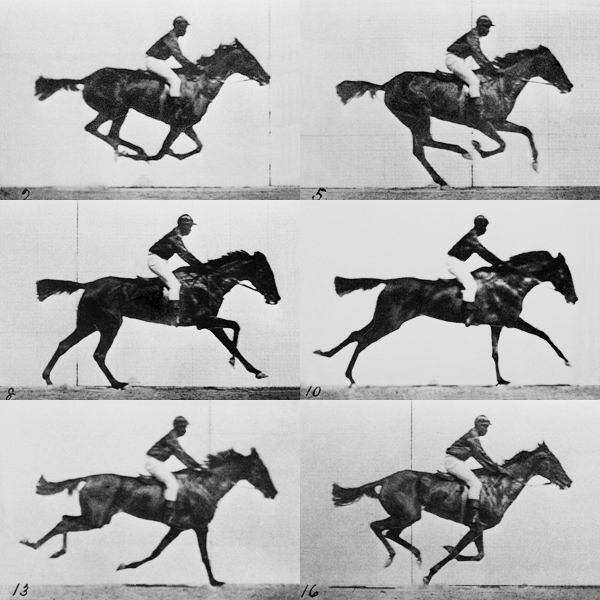
Eadweard Muybridge’s photo series “The Horse In Motion” is one of the first photograph sets to illustrate motion. Muybridge created his own technology with the help of engineers to be able to capture the images of the horse. As pointed out by PBS, one of the main points of photographing the horse was to scientifically prove that a horse lifts all four legs when it gallops. Using chemicals to develop the photos, Muybridge essentially created the first motion picture. The photograph we’re featuring in our exhibit is the set that Muybridge used to show that a horse’s legs are off the group mid-gallop.3
This artwork fits well with our exhibit since it uses the science of new technology to illustrate our theme. The horse’s name was Occident, it was owned by the former governor of California, Leland Stanford. The legend includes a wager of $25,000 (in 1872!), however it is unconfirmed, according to all-art. Muybridge used a total of twenty-four cameras, as he was attempting to take the shot. On the first successful shoot, he used a total of 12 stereoscopic cameras, that were 21 inches apart to cover the 20 feet taken by the horse’s stride, taking pictures at one thousandth of a second (all-out)3. According to all-out, Muybridge required an electrical trigger to capture the photos. He collaborated with the chief engineer for the Southern Pacific Railroad, John D. Isaacs. It was thanks to Isaac’s ingenuity that Muybridge was able to successfully capture the photographs.
